
When your furnace is not heating, the first instinct is usually to assume something major has gone wrong. Sometimes that’s true, but many no-heat problems start with something much simpler: an incorrect thermostat setting, a dirty filter, a tripped breaker, or an issue with the ignition system.
For homeowners in Anchorage, those problems can become urgent quickly once the heating season begins. A reliable heating system is essential when temperatures drop, and even a short loss of heat can make a home uncomfortable or put plumbing at risk.
The good news is that there are a few safe things you can check before scheduling furnace repair. Here are seven common reasons a furnace may stop producing warm air, plus when it’s time to call an HVAC professional.
If your furnace still isn’t producing heat after basic troubleshooting, contact Moore Heating & Air for professional furnace repair in Anchorage.
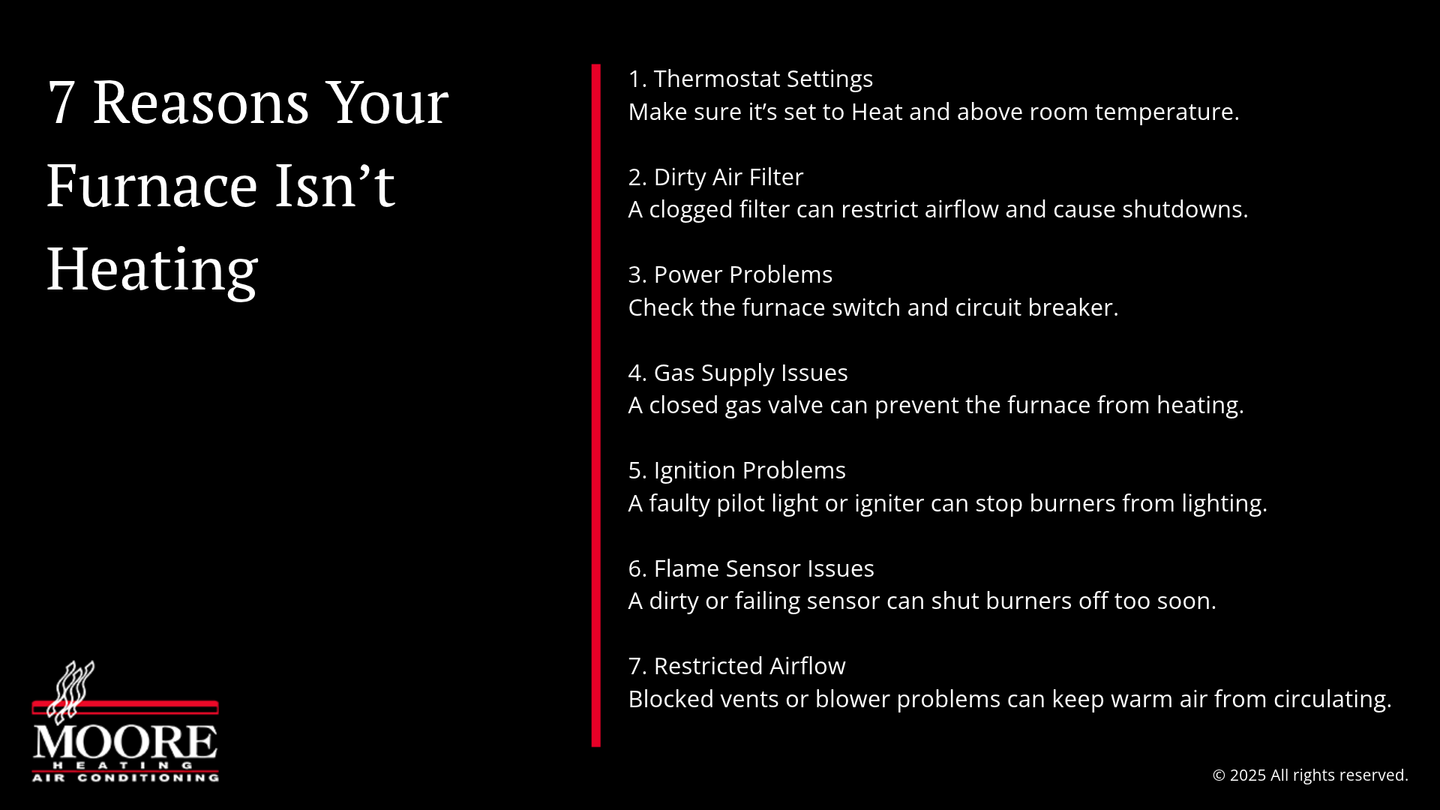
1. The Thermostat Is Set Incorrectly
Before looking at the furnace itself, start with the thermostat.
It may sound basic, but incorrect thermostat settings are one of the easiest reasons a furnace won’t produce heat. Make sure the thermostat is:
- Set to Heat
- Set above the current room temperature
- Powered on
- Displaying the correct temperature
A thermostat set to Cool or Fan won’t tell the furnace to begin the heating process. Likewise, if the temperature setting is lower than the room temperature, the system has no reason to turn on.
If the display is blank or unreliable, try replacing the batteries. Dead batteries can prevent the thermostat from communicating with the furnace even when everything else is working normally. After adjusting the settings, give the system a few minutes to begin a new heating cycle.
2. The Air Filter Is Dirty or Clogged
A dirty air filter can cause far more trouble than many homeowners realize. As dust and debris collect, the filter restricts airflow through the furnace. That means the system has to work harder to move warm air through your home.
A clogged air filter can eventually cause the furnace to overheat. Modern furnaces include safety controls designed to protect the system, and the high-limit switch may shut the burners down when internal temperatures get too high.
Signs of a clogged filter can include:
- Weak airflow from vents
- The furnace turning on and off frequently
- Cool or cold air coming from registers
- Higher heating costs
- A system that shuts down unexpectedly
Most furnace filters should be checked regularly and replaced about every 30 to 90 days, depending on the filter, household, and system use. During an Alaska winter, frequent furnace operation may mean filters need attention more often.
Regular filter replacement supports proper airflow, improves efficiency, and can prevent unnecessary furnace problems.
3. The Furnace Has Lost Power
Even a gas furnace needs electricity to operate components such as the blower motor, thermostat, controls, and electronic ignition.
If the furnace won’t turn on at all, check your electrical panel for a tripped circuit breaker. The furnace may have its own breaker labeled Furnace, HVAC, or Heating. If the breaker has tripped, reset it once.
Also check the furnace power switch, which often looks like a standard wall switch near the unit. It can occasionally be turned off accidentally. If the circuit breaker trips again after being reset, stop troubleshooting and call a professional. Repeated trips may indicate an electrical issue that requires a trained HVAC technician.
Some furnaces also have safety switches connected to their access panels. If a door or panel isn’t closed correctly, the furnace may refuse to run as a safety precaution.
4. The Gas Supply Is Interrupted
If your furnace runs on natural gas, it cannot produce heat without a consistent fuel supply. A closed gas valve, low gas pressure, or another gas supply problem can prevent the burners from lighting.
If you are comfortable checking visually, confirm that the furnace gas valve has not been accidentally turned off. You can also see whether other gas appliances in your home are working normally.
However, gas-related troubleshooting should stop there. If you smell gas, suspect a gas leak, or believe there may be a problem with the gas line, leave the area and follow emergency safety procedures. Do not attempt to repair the issue yourself.
Problems involving the gas supply, gas valve, or gas line should always be handled by a qualified professional.
5. The Pilot Light or Ignition System Is Failing
Your furnace needs a way to ignite the fuel that creates heat. Older furnaces may use a standing pilot light, while many modern furnaces rely on an electronic ignition system.
If the pilot light goes out or an electronic igniter fails, the burners may never light.
Possible signs of an ignition problem include:
- Repeated clicking
- A furnace that starts but does not produce heat
- No visible ignition where applicable
- Burners that fail to light
- Cool air coming from the vents
A faulty ignitor may click repeatedly without successfully starting the furnace. In other cases, you may notice the igniter glow but the burners still don’t ignite.
Some systems can also experience ignition problems when a condensate drain becomes clogged. A blocked drain can trigger safety controls that prevent burner ignition. Because the ignition system involves fuel and electrical components, this is a problem best left to professional furnace repair services.
6. The Flame Sensor Is Dirty or Failing
If your burners ignite but turn off again within a few seconds, the flame sensor may be involved. The flame sensor is a safety component that confirms a flame is actually present after ignition. If it can’t detect the flame, the system shuts off the gas supply to prevent unburned fuel from accumulating.
A dirty or failing flame sensor can create a frustrating pattern where the furnace starts, produces heat briefly, and then shuts down.
Common signs of flame sensor issues include:
- Burners lighting and quickly shutting off
- Short heating cycles
- Repeated ignition attempts
- A furnace running without consistently producing heat
Cleaning or replacing a flame sensor requires access to internal components, so homeowners should leave this repair to a professional HVAC technician.
7. Airflow or Internal Components Are Causing a Shutdown
Sometimes the furnace itself is producing heat, but that heat isn’t reaching the rest of the home properly.
Restricted airflow can come from:
- A clogged filter
- Closed or blocked supply vents
- Blocked return vents
- A struggling blower motor
- Problems with the fan or limit switch
- Ductwork issues
If the blower cannot circulate air, heat can build up inside the furnace. The system’s limit switch may then shut the burners off to prevent overheating. Problems with other internal components, including the blower motor or heat exchanger, may also affect heating performance.
If your furnace is running but blowing cold air, producing weak airflow, or repeatedly shutting down, professional troubleshooting is usually the safest next step.
Why Is My Furnace Blowing Cold Air?
A furnace blowing cold air doesn’t always mean the furnace itself has completely failed.
Cold or cool air can result from:
- The thermostat fan being set to On instead of Auto
- A clogged filter causing overheating
- An ignition failure
- A failing flame sensor
- Gas supply problems
- A blower that continues running after the burners shut off
If the system produces hot air at first and then quickly switches to cold air, pay attention to how often that happens. Repeated short cycles may point to a safety shutdown or another developing furnace issue.
When Should You Call an HVAC Professional?
Basic furnace troubleshooting can help rule out simple issues, but there is a point where homeowners should stop and call for professional service.
Contact an HVAC professional if:
- You smell gas
- The breaker repeatedly trips
- Your burners will not ignite
- The pilot light will not stay lit
- The furnace repeatedly starts and stops
- The system is making unusual mechanical noises
- The furnace runs but cannot produce heat
- You suspect a gas valve, blower motor, heat exchanger, or ignition problem
A professional HVAC technician has the tools and training to diagnose problems safely and correctly. Trying to repair internal furnace components yourself can create additional damage or interfere with important safety controls.
How Routine Furnace Maintenance Helps Prevent No-Heat Problems
Many common furnace failures develop gradually. Regular maintenance gives a technician the opportunity to catch issues before your home loses heat in the middle of winter.
Professional maintenance may include:
- Inspecting the ignition system
- Checking the flame sensor
- Testing safety controls
- Evaluating the blower motor
- Checking filters and airflow
- Inspecting the heat exchanger
- Confirming thermostat operation
- Looking for developing electrical or gas-related issues
Routine maintenance can also improve furnace efficiency, lower unnecessary energy use, and help extend the life of the system. Annual maintenance is particularly valuable in Alaska because furnaces work so hard throughout the heating season. Older furnaces especially may benefit from closer monitoring as internal parts begin to wear.
Get Your Furnace Heating Again
When your furnace stops producing warm air during an Alaska fall or winter, you want to know why as quickly as possible. Start with the simple things: check the thermostat, filter, circuit breaker, vents, and power switch. If those checks don’t solve the problem, it is time for professional service.
Moore Heating & Air provides furnace repair in Anchorage, routine maintenance, troubleshooting, and emergency services to help homeowners stay warm throughout the heating season.
If your furnace is not heating, contact Moore Heating today to schedule professional furnace repair and get your home comfortable again.