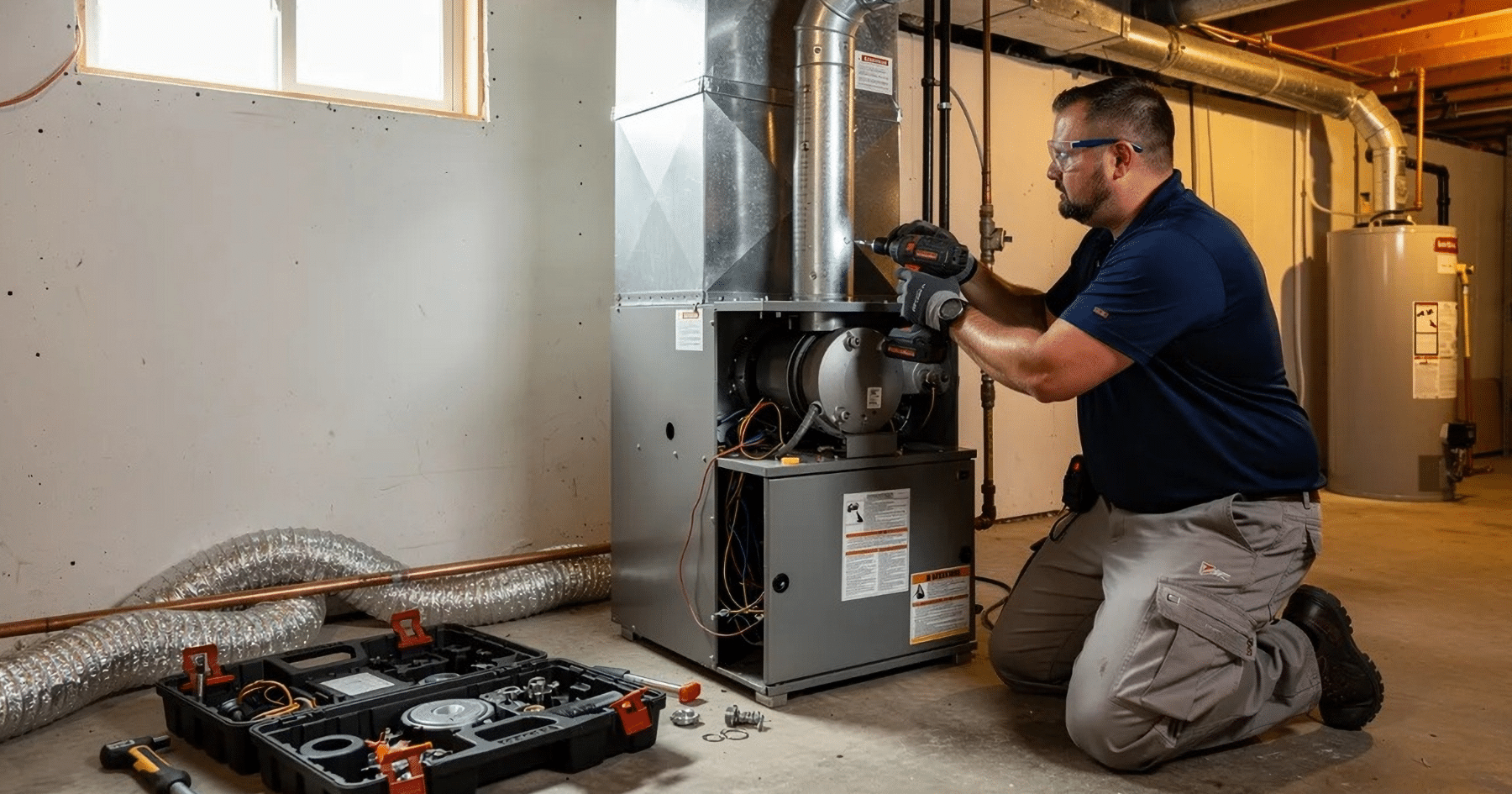
In Alaska, your furnace works harder than it would in most other places. Long winters, freezing temperatures, and months of steady use all affect your heating system’s lifespan. While many furnaces can last 15 to 20 years with proper care, Alaska’s climate can shorten that timeline if the system is not maintained regularly.
If your furnace struggled last winter, needed frequent repairs, or no longer heats your home evenly, summer is a smart time to evaluate whether you need furnace repair in Alaska or a full replacement before the next cold season arrives.
At Moore Heating & Air, we help Anchorage homeowners make confident decisions about repair, replacement, and long-term comfort. Here are six signs it may be time to take a closer look at your system.
Not sure whether to repair or replace your furnace? Contact Moore Heating today to schedule a residential HVAC inspection.
How Long Does a Furnace Last in Alaska?
Most furnaces last around 15 to 20 years, depending on the system, installation quality, maintenance history, and how heavily it is used.
In Alaska, that lifespan can vary. A furnace that runs for long stretches through subzero weather may experience more wear than a system in a milder climate. Regular maintenance, timely repairs, and proper system sizing can help extend its life.
If your furnace is over 10 years old, it does not automatically need to be replaced. But it should be inspected regularly so small issues can be addressed before they become expensive problems.
Why Alaska Winters Shorten Furnace Lifespan
Alaska winters place intense demand on heating systems. Your furnace may run for months with little downtime, especially during long cold snaps. That constant use affects major components like blower motors, burners, ignition systems, and heat exchangers.
Common factors that shorten furnace lifespan include:
- Long heating seasons
- Subzero temperatures
- Dirty filters or restricted airflow
- Skipped maintenance
- Frequent short cycling
- Aging parts
- Improper installation or sizing
A professional residential HVAC inspection can help determine how well your system is holding up and whether repair or replacement makes the most sense.
6 Signs It May Be Time to Repair or Replace
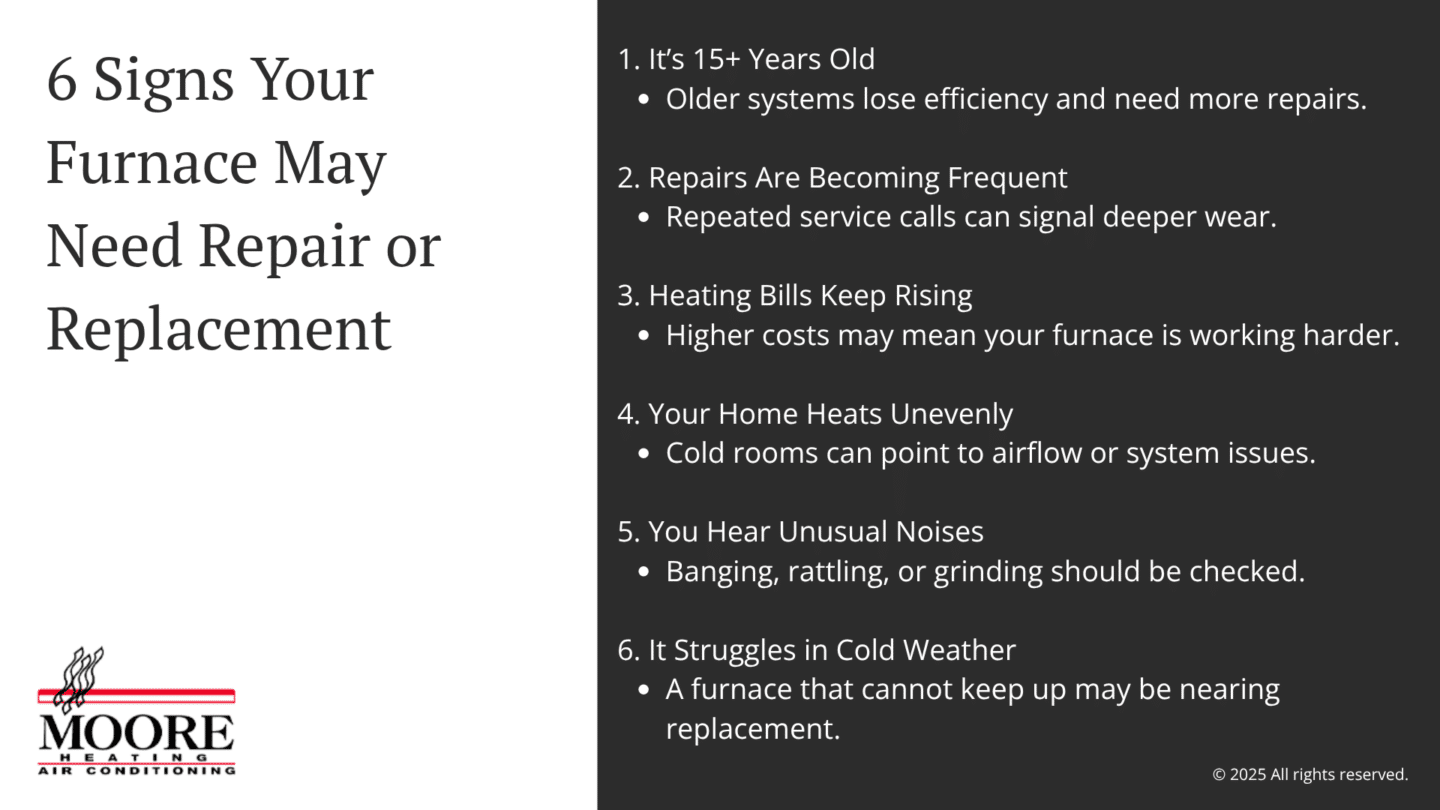
1. Your Furnace Is More Than 15 Years Old
Age is one of the biggest factors in deciding whether to repair or replace a furnace.
If your system is approaching 15 years or older, it may still work, but it may no longer operate as efficiently as it once did. Older furnaces often need more frequent repairs and may struggle to keep up during Alaska winters.
Repair may make sense if the issue is minor and the system has been well maintained. Replacement may be the better choice if repairs are becoming frequent or expensive.
2. You Needed Multiple Repairs Last Winter
One repair is not always a red flag. But if your furnace needed service more than once in the same season, that may be a sign the system is wearing down.
Frequent furnace repair in Alaska can become expensive quickly. If you’re calling for repairs every winter, it may be worth comparing repair costs against the cost of a newer, more efficient system.
A technician can help you understand whether the latest issue is isolated or part of a larger pattern.
3. Your Heating Bills Keep Increasing
Rising energy costs can happen for many reasons, but your furnace may be part of the problem.
As heating systems age, they often lose efficiency. That means they use more energy to produce the same amount of heat. If your bills are climbing and your usage has not changed, your system may be working harder than it should.
A professional inspection can identify whether the issue is airflow, maintenance-related, or a sign that the furnace is nearing the end of its lifespan.
4. Your Home Has Uneven Heat
If some rooms stay cold while others feel comfortable, your heating system may be struggling to distribute air properly.
Uneven heating can be caused by:
- Ductwork issues
- Blower motor problems
- System sizing problems
- Aging components
- Restricted airflow
Sometimes this can be fixed with maintenance or repair. Other times, it may indicate that the furnace is no longer powerful or efficient enough for your home’s needs.
5. Your Furnace Makes Unusual Noises
All furnaces make some noise, but loud banging, rattling, grinding, or screeching shouldn’t be ignored.
These sounds may point to loose parts, worn motors, ignition problems, or internal mechanical stress. If the issue is caught early, a repair may be enough. If the noise is tied to major component wear, replacement may be the safer long-term solution.
6. Your Furnace Struggles to Keep Up in Cold Weather
If your furnace runs constantly but your home still feels cold, the system may be losing capacity.
In Alaska, reliable heat matters. A furnace that cannot maintain temperature during cold weather may put your comfort, plumbing, and safety at risk. While this doesn’t always mean replacement is required, it does mean the system should be inspected before the next heating season.
Should You Repair or Replace Your Furnace?
The right choice depends on your furnace’s age, condition, repair history, and efficiency.
Repair may be the best option if:
- The furnace is under 10 years old
- The repair is minor
- The system has been maintained regularly
- Your energy bills are stable
- The furnace still heats your home well
Replacement may be worth considering if:
- The furnace is 15+ years old
- Repairs are becoming frequent
- Repair costs are high
- Efficiency is declining
- The system struggles in cold weather
- You want better long-term reliability
A trusted technician can walk you through the options and help you choose the solution that makes the most sense for your home.
Why Summer Is the Best Time to Plan Ahead
Summer is one of the best times to evaluate your furnace because you are not under pressure from freezing weather.
Planning ahead gives you time to:
- Schedule service before fall demand increases
- Compare repair and replacement options
- Budget for larger projects
- Avoid emergency winter decisions
- Ensure your system is ready before cold weather returns
If replacement is needed, summer also gives your team time to install the system correctly without the urgency of a no-heat situation.
What Happens During a Residential HVAC Inspection?
A residential HVAC inspection gives homeowners a clear picture of their system’s condition.
During an inspection, technicians may:
- Check furnace performance
- Inspect key components
- Test airflow and thermostat function
- Look for signs of wear or damage
- Identify safety concerns
- Review repair or replacement options
This process helps you make an informed decision instead of guessing whether your furnace has another winter left.
Why Anchorage Homeowners Trust Moore Heating
For decades, Moore Heating & Air has helped Alaska homeowners stay warm, safe, and comfortable through long winters.
Our team provides:
- Furnace repair and maintenance
- Furnace replacement in Anchorage
- HVAC inspections
- Heating system evaluations
- Installation support
We believe in honest recommendations, quality workmanship, and practical solutions built for Alaska homes.
Schedule Furnace Repair or Replacement Planning Today
Your furnace may not be running right now, but winter will return. If your system showed signs of wear last season, summer is the time to take action.
Moore Heating & Air provides trusted furnace repair in Alaska, furnace replacement in Anchorage, and professional residential HVAC inspections to help homeowners plan ahead with confidence.
Contact Moore Heating today to schedule your furnace inspection and find out whether repair or replacement is the right next step.