
The best time to schedule furnace maintenance in Alaska is before you depend on your heating system every day. For homeowners in Anchorage, Alaska, late summer and early fall are ideal because temperatures are starting to shift and service calendars have not yet reached peak-season demand.
Furnaces in Alaska work harder than they do in most other states. During the coldest months, a system may run almost continuously to maintain a safe, comfortable indoor temperature. That makes preventative maintenance especially important for performance, efficiency, and reliability.
A pre-fall inspection gives you time to catch small problems before they become costly repairs, test important safety components, and make sure your system is ready to provide reliable heat when temperatures drop.
Don’t wait for the first cold snap—contact Moore Heating & Air today to schedule pre-fall heating service.
When Should You Schedule Furnace Maintenance in Alaska?
For most Alaska homeowners, annual furnace maintenance should be scheduled before the coldest part of the year begins.
Late summer through early fall is particularly useful because your heating system has been mostly idle and there is still time to handle repairs, replacements, or other heating needs before winter demand increases.
Anchorage homes use a range of systems built for extreme conditions, including gas furnaces, boilers, garage heaters, central heating systems, and water heaters. Each has different maintenance needs, but all benefit from routine inspection.
A professional tune-up before winter can help:
- Improve system performance and energy efficiency
- Identify developing problems
- Reduce unexpected breakdowns
- Extend equipment lifespan
- Ensure the system is operating safely
Preventative maintenance is especially valuable in Alaska because a heating failure during subzero weather can become much more than an inconvenience.
Why Pre-Fall Furnace Maintenance Matters
Your furnace may have spent most of the summer turned off, but that does not mean last winter’s wear disappeared.
During extreme cold, furnaces can run for long stretches without much rest. Continuous operation increases wear on motors, burners, filters, ignition components, and other parts of the HVAC system.
Routine maintenance allows technicians to find those issues before your furnace goes back under heavy demand. It also gives homeowners time to make thoughtful repair decisions instead of dealing with them during an emergency.
Your 7-Step Pre-Fall Furnace Checklist
Homeowners can complete several useful checks before scheduling professional HVAC services in Anchorage.
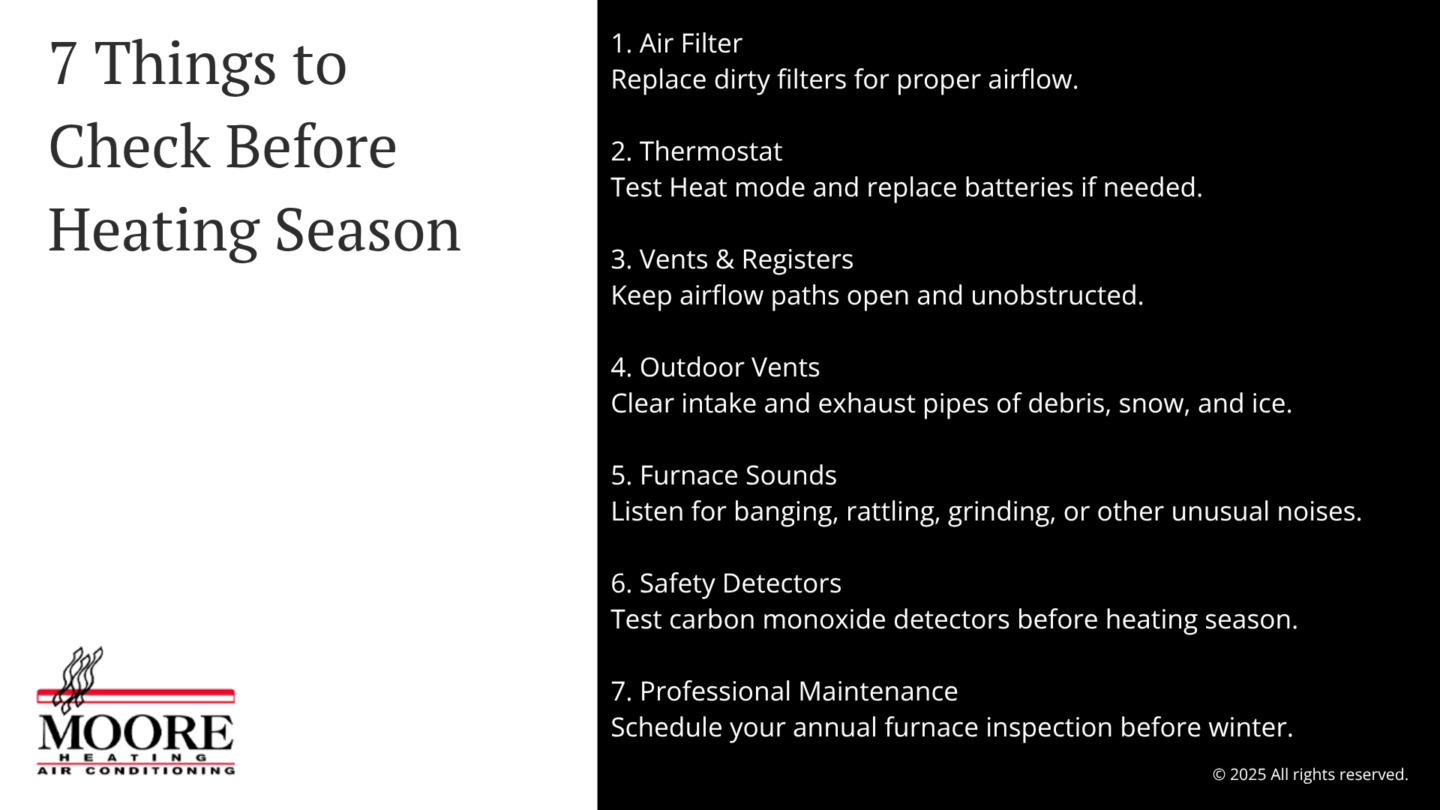
1. Inspect the Air Filter
A dirty filter restricts airflow and forces your furnace to work harder. During an Alaska winter, filters can clog quickly because the system operates so frequently.
Before heating season:
- Check for visible dirt and buildup
- Replace the filter if necessary
- Make sure the replacement fits correctly
- Check it monthly once winter begins
Monthly filter changes may be necessary during continuous winter use to maintain proper airflow and help prevent overheating.
2. Test the Thermostat
Set your thermostat to Heat and raise the target temperature a few degrees above the room temperature. The furnace should start and begin delivering warm air within a reasonable amount of time.
Watch for delayed startup, inaccurate temperatures, frequent cycling, or an unreliable display. Replace thermostat batteries if needed.
During extreme cold, maintaining a relatively steady indoor temperature can also reduce furnace strain. Large setbacks may force the system to work harder to recover.
3. Check Vents and Registers
Make sure supply vents and return registers are open and unobstructed.
Furniture, rugs, and other household items can restrict airflow and create uneven heating. If certain rooms stayed colder than others last winter, mention that during your professional inspection because uneven heating can signal an airflow, ductwork, or furnace issue.
4. Inspect Exterior Intake and Exhaust Vents
Exterior vents deserve special attention in Alaska.
Before winter, inspect intake and exhaust pipes for debris. Once snow begins falling, check regularly for snow, ice, and frost buildup.
Blocked vents can interfere with safe furnace operation and may trigger a safety shutdown. Frozen condensate lines can also cause some high-efficiency systems to stop working during extreme cold.
5. Listen for Unusual Noises
Turn your system on and listen carefully.
Banging, rattling, screeching, grinding, or other unfamiliar noises may indicate:
- Loose components
- Motor or blower problems
- Ignition issues
- Developing mechanical damage
Addressing these issues before winter is much easier than waiting until your furnace is running around the clock.
6. Test Your Safety Detectors
Test your carbon monoxide detectors and make sure alarms are functioning properly. They should be checked regularly throughout winter, particularly when heating equipment is operating frequently and homes remain tightly sealed.
Professional maintenance can also identify safety concerns associated with fuel supply, electrical components, or combustion.
7. Schedule Professional Furnace Maintenance
Homeowner checks are helpful, but they are not a substitute for professional service.
An HVAC inspection allows a trained technician to evaluate components that are difficult or unsafe for homeowners to inspect, uncover developing problems, and confirm that important safety controls are working properly.
What Happens During Professional Furnace Maintenance?
Professional furnace services go beyond confirming that your system turns on.
Depending on your equipment, technicians may:
- Inspect burners and ignition components
- Evaluate the pilot light where applicable
- Check thermostat performance
- Inspect airflow and filter condition
- Examine electrical connections
- Evaluate venting and exhaust
- Look for worn or damaged components
- Confirm safety controls are working properly
The goal is to ensure your complete heating system can operate safely and efficiently throughout another Alaska winter.
ENERGY STAR recommends annual pre-season HVAC checkups and regular filter maintenance to help heating systems operate safely and efficiently
What Heating Problems Should You Fix Before Winter?
Pre-fall maintenance may reveal problems that should be addressed before temperatures drop.
Consider heating repair if you notice:
- Uneven heating
- Weak airflow
- Unusual noises
- Difficulty starting the furnace
- Frequent cycling
- Problems that appeared last winter
- A system that struggled during severe cold
Small problems rarely improve on their own. Once the furnace begins operating continuously again, existing wear can become worse.
Early repair gives your technician time to diagnose and fix the issue before it becomes an emergency.
Why Preventative Maintenance Saves Money
Routine maintenance can help homeowners manage long-term heating costs while protecting equipment.
A clean, well-maintained furnace can operate more efficiently, while neglected equipment may require more energy to produce the same amount of heat.
Regular service can:
- Reduce unnecessary energy use
- Improve airflow
- Catch smaller problems before major repairs are needed
- Extend equipment lifespan
- Reduce the chance of emergency service
- Delay premature replacement
That makes preventative heating maintenance an important way to protect both your comfort and your investment.
Don’t Forget About Your Other Heating Equipment
Furnaces are only one part of home comfort in Alaska.
Depending on your property, pre-winter preparation may also include boilers, water heaters, garage heaters, radiant heat, and other plumbing and heating equipment.
Reliable hot water and dependable heat become especially important once temperatures drop. Moore Heating offers a full range of heating, plumbing, maintenance, repair, and installation solutions to help homeowners stay comfortable year-round.
Why Local HVAC Expertise Matters in Alaska
Extreme subzero temperatures, long heating seasons, blocked exterior vents, frozen components, and extended run times create challenges that are less common in milder climates.
Moore Heating & Air has served Anchorage, Eagle River, and the Mat-Su Valley for decades. Our certified professionals understand local heating needs and provide maintenance, repair, installation, plumbing, and other comprehensive services designed for Alaska homes.
And when an unexpected heating problem happens, Moore Heating provides 24/7 emergency heating repair services in Anchorage.
Don’t Wait for the First Cold Day
As fall approaches, demand for heating services in Anchorage begins to increase. Scheduling earlier gives you:
- More appointment flexibility
- Time to complete repairs
- Time to consider replacement options if needed
- Greater confidence heading into winter
It also means you aren’t competing for appointment slots with homeowners already dealing with no-heat emergencies.
Schedule Furnace Maintenance in Alaska Before Winter
Your furnace is about to begin another demanding Alaska heating season. A little preparation now can make a meaningful difference once winter arrives.
Moore Heating & Air provides furnace maintenance in Alaska, professional HVAC inspections, furnace repair, preventative maintenance, and heating solutions designed for local homes and businesses.
Contact Moore Heating today to schedule your pre-fall furnace maintenance and make sure your heating system is ready when Alaska’s cold weather returns.